Vectroplusplus
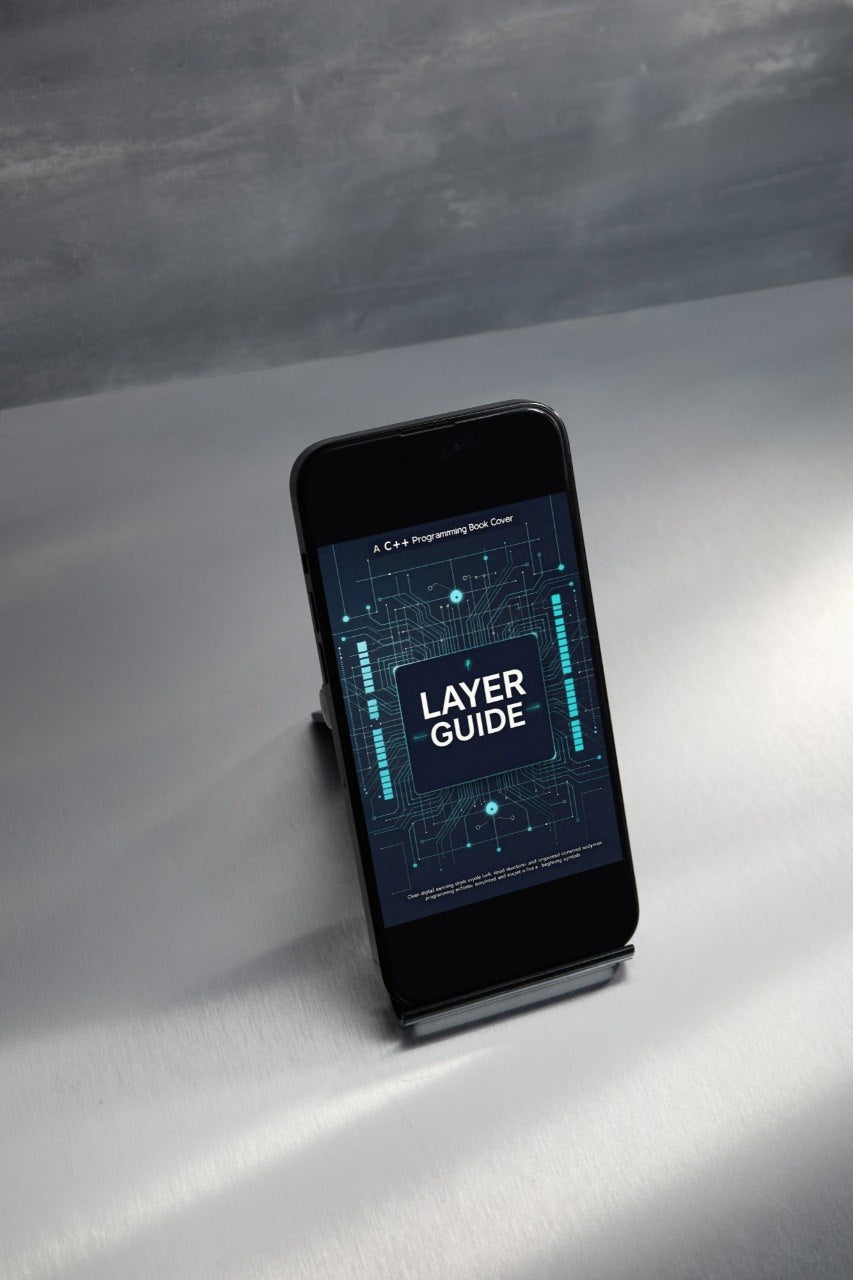
Layer Guide
Layer Guide
Couldn't load pickup availability
- ⬇️ Digital file available after purchase
- 🗂️ Long-term availability
- 🔒 Secure checkout
- 🗓️ Content updated in 2026
Self-paced learning overview
1. Problem Statement
Many learners feel comfortable with single variables but become unsure when a program needs to work with several values. Repeated code can make examples longer, harder to read, and more difficult to adjust. Loops may also feel confusing because they combine counting, conditions, and repeated instructions in one structure. Arrays can add another challenge because learners must understand indexes, stored values, and how to move through a group of items. Layer Guide is created to help learners study these topics in a structured way, with each idea placed in a clear learning order.
2. Solution
Layer Guide explains repeated actions and grouped data through careful examples and guided practice. The materials introduce loops step by step, showing how repetition works, when it is useful, and how it can reduce unnecessary repeated lines. Learners then study arrays as a way to store related values under one name and work with them through indexes. Each section connects loops and arrays so learners can see how these concepts often work together in C++ programs. This tier helps learners build a more organized view of program layers, from single values to repeated patterns.
3. What’s Inside
Layer Guide includes detailed materials focused on loops, arrays, indexes, repeated logic, and beginner-friendly data grouping. The course begins with a review of conditions and expressions, because these ideas are often used inside loop structures. Learners then study common loop patterns, including counting loops, condition-based loops, and simple repeated tasks.
The materials explain how a loop starts, how it continues, when it stops, and what happens during each cycle. Examples show how small changes in a condition or counter can change the behavior of a loop. Learners are guided to read loop examples carefully so they can understand the order in which instructions run.
After loops, the course introduces arrays as a structured way to store several related values. Learners study how array positions work, how indexes are counted, and how values can be read or updated. The materials include examples that show how arrays can store numbers, simple text values, or repeated sets of information.
A key part of Layer Guide is the connection between loops and arrays. Learners study how loops can move through array values, how to calculate totals, how to find a value, and how to print stored information in order. Practice tasks may include completing loop headers, tracing array values, correcting index mistakes, and explaining what a repeated section does.
The tier also includes review sections on common beginner mistakes, such as off-by-one errors, unclear loop conditions, and misplaced updates. These review notes are written in a calm, practical way so learners can understand mistakes as part of the study process.
4. Who is this for?
Layer Guide is for learners who understand basic variables, conditions, and functions, but want to study repeated actions and grouped values in more detail. It is suitable for learners who feel uncertain about loops, arrays, or code that runs more than once. This tier is also helpful for learners preparing to study larger program structures and object-focused topics.
5. What You’ll Learn
- How loops repeat instructions in C++
- How counters and conditions guide repeated actions
- How to read and write simple loop structures
- How arrays store several related values
- How indexes are used to find array positions
- How loops and arrays work together
- How to trace repeated code step by step
- How to notice common loop and index mistakes
- How to organize code that handles more than one value
6. Refund Note
Your purchase is supported by a clear refund policy, giving you time to review the materials before deciding if they are right for you.
Share
Who are the Vectroplusplus courses created for?
Who are the Vectroplusplus courses created for?
The courses are created for learners who want to study C++ through organized explanations, practical examples, and structured materials.
Do I need previous coding knowledge?
Do I need previous coding knowledge?
Some tiers are beginner-friendly, while higher tiers explore more detailed C++ topics. Each course page explains the suggested starting point.
How are the course materials organized?
How are the course materials organized?
The materials are arranged into modules, examples, exercises, and review sections so learners can move through the topics in a clear order.